
How Conwy Mind used digital service design to create a wellbeing check-in with a far-reaching purpose
To remove barriers to mental health support, Conwy Mind built an online wellbeing check-in that lets people reflect on their wellbeing, book support on their own terms, and highlight mental health needs in their community.


To remove barriers to mental health support, Conwy Mind built an online wellbeing check-in that lets people reflect on their wellbeing, book support on their own terms, and highlight mental health needs in their community.
When Conwy Mind joined a Third Sector Digital Service Design course with ProMo Cymru, they wanted to explore how digital could help them better understand and support the people using their services. They aimed to simplify self-referrals, cut administration time, and make signposting easier for staff.
The result was an online wellbeing check-in that delivers a low-pressure way for people to reflect and access support, provides Conwy Mind’s first 24/7 out-of-hours service, and captures real-time community insight from over 300 responses and counting, helping shape future workshops, social media content, and funding applications.

Uncovering the problem through user research
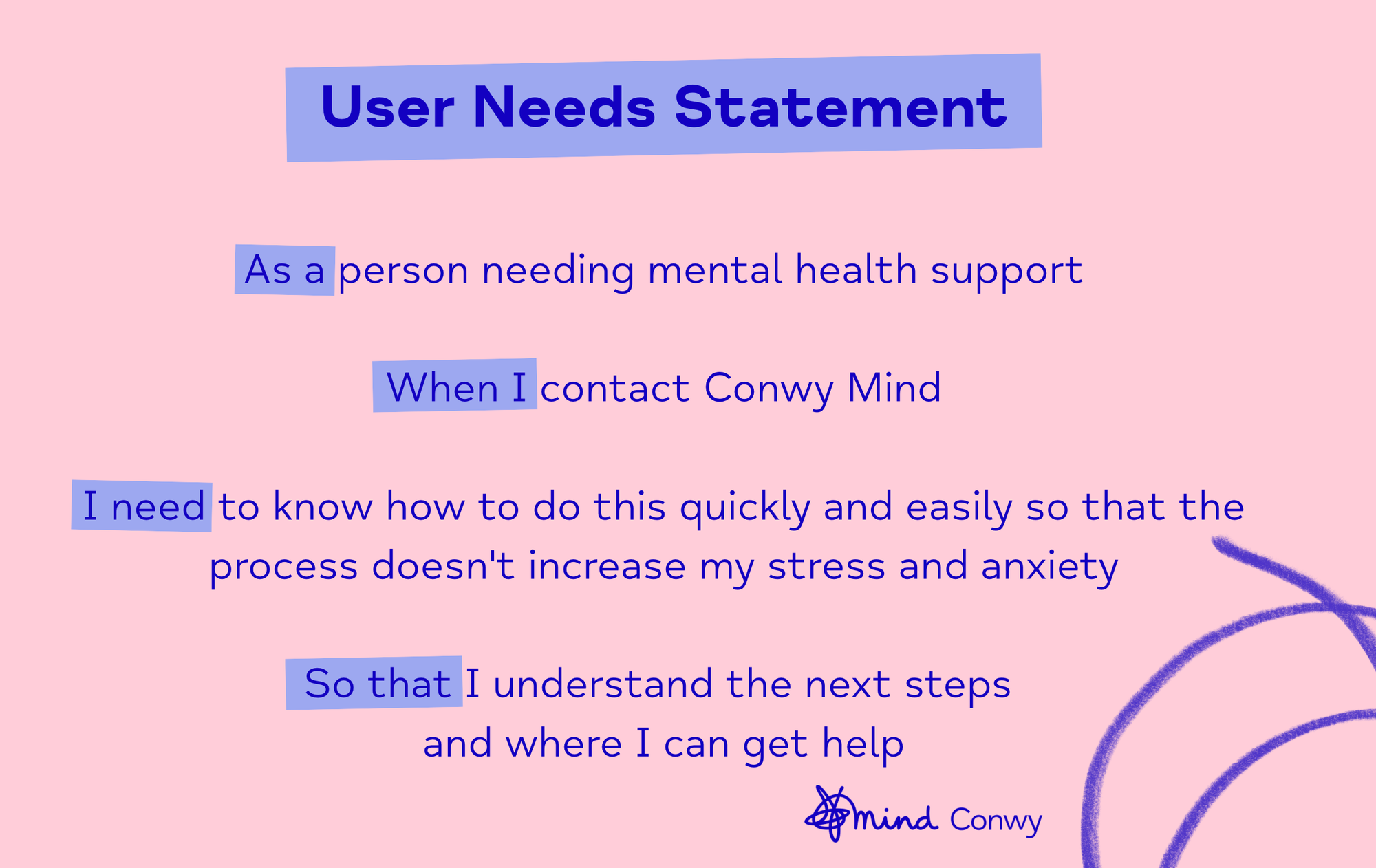
Through the service design process, the team researched the real barriers facing service users and staff at the first point of contact:
- High anxiety: Social anxiety made initiating a phone call a daunting first step.
- Fear of complexity: Users worried about being passed between services or stuck on hold without clear expectations.
- Accessibility issues: Call-in times restricted support strictly to standard working hours.
- Staff workload: Triage calls drained staff time away from direct intervention.
Starting with a (not so simple) idea
Initially, the team assumed the best solution was to build a full, automated Digital Triage Tool on their website to solve all these problems at once.
However, staff research and user feedback revealed issues on both ends:
- Front-end friction: A heavy triage form risked confusing users, deterring people in distress, and stripping away Conwy Mind’s essential human touch.
- Back-end complexity: Building and managing complex routing logic and automated workflows proved far too heavy-duty to build and maintain effectively.
Pivoting to a simpler solution
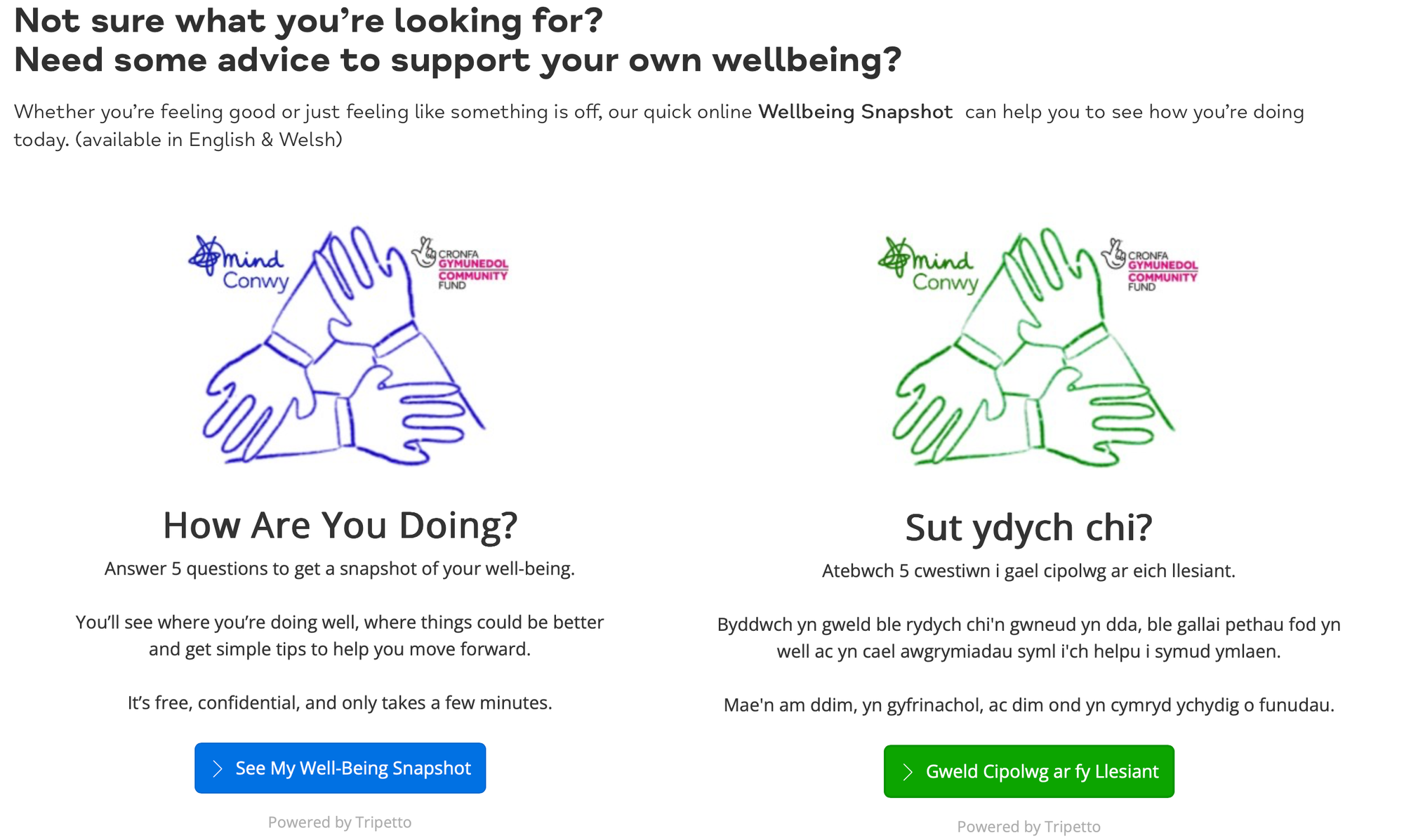
Realising a full digital triage system was too complex, the team shifted approach. Instead of over-engineering intake, they stepped back and created the Wellbeing Snapshot - a simple, low-pressure online check-in built using Tripetto. Tripetto is an easy-to-use form builder that lets organisations design interactive online forms that adapt dynamically based on how a person answers. (If you’re exploring options for your own organisation, you can read our full breakdown of the best free survey tools for Welsh non-profits here.)
The goal was to create something quick and accessible that people could complete independently, without needing a referral or prior engagement with Conwy Mind. The Snapshot gives people space to pause and reflect on their wellbeing while providing tailored signposting based on their responses.
Designing a bridge between self-reflection and personal support
One of the Wellbeing Snapshot’s key strengths is that it helps people take the next step towards support. After completing the Snapshot, people are given the option to book one of Conwy Mind’s Mental Health ‘MOTs’, a free, 30-minute, one-to-one conversation with a mental health professional.
This creates a natural pathway from independently reflecting on personal wellbeing to then speaking with someone about how they're feeling and what might help. By allowing people to take that first step privately and at their own pace, the Snapshot helps reduce some of the barriers associated with seeking support, turning personal reflection into an opportunity for meaningful human connection.
By reaching people who might not otherwise seek support, including those exploring their wellbeing outside normal opening hours, the Snapshot has helped increase Mental Health ‘MOT’ bookings and become a valuable new route into Conwy Mind’s services.
Over 300 responses – and a new source of insight
With over 300 responses so far, the Snapshot is giving Conwy Mind a clearer picture of community wellbeing. The data highlights common trends, like links between sleep, energy, and focus, high levels of anxiety, and a tendency for people to support others while ignoring their own needs.
These findings actively feed into Conwy Mind's wider work. The team uses what they learn to inform awareness-raising social media content, workshops, and future support options, responding directly to emerging needs rather than relying on assumptions.
The data is also invaluable when demonstrating demand in funding applications. Additionally, the team has experimented with AI tools to analyse the dataset and spot trends around sleep, screen time, and response profiles, helping adapt service delivery accordingly, create 12 month reports, and more.
Key takeaway: The power of service design
Trust the process: start small, test assumptions, listen carefully to user needs, and don't be afraid to pivot. Conwy Mind’s journey shows how taking a digital service design approach helps organisations deliver simple, impactful tools built around genuine human needs.
Take the next step in your digital journey
Sign up to our newsletter to get first access to upcoming Designing Digital Services courses, free training sessions, sector events, and practical guides.

Like this post? Click below to share: